Queens County Criminal Court handles criminal cases for residents and visitors in New York City, including misdemeanors, violations, and arraignments. The court schedules hearings, maintains official case records, and provides a structured calendar to ensure that cases move efficiently through the legal system. It also oversees bail hearings, pre-trial conferences, and procedural matters that are part of New York State’s legal framework. The court’s staff ensures that filings, motions, and case documentation are processed accurately and on time. This structure helps all parties—defendants, attorneys, and victims—stay informed and prepared for each stage of the case.
The court manages criminal hearings, arraignments, and trials, serving as a central hub for justice in Queens County. Defendants, attorneys, and members of the public rely on Queens Courts Records to access accurate information related to criminal court cases, court calendars, and case updates. Judges and clerks work to maintain fairness and compliance with state law while ensuring cases are scheduled promptly and handled efficiently. Public access to hearings is generally permitted unless restricted by law, supporting transparency in the judicial process. Through well-organized documentation and standardized procedures, Queens Courts Records help individuals track case progress, prepare for appearances, and understand legal outcomes more clearly.
What Happens at Queens County Criminal Court
The Queens County Criminal Court handles criminal cases for residents and visitors in Queens, New York. It manages misdemeanor offenses, violations, and preliminary felony hearings, providing a central venue for justice in the borough.
Queens County Criminal Court is part of New York State’s unified court system, focusing on criminal matters. Its role includes hearing cases ranging from minor violations and summonses to more serious misdemeanor cases. The court ensures that individuals charged with crimes have the opportunity for a fair and timely hearing, and it works alongside other courts in the state to manage the flow of criminal cases efficiently.
Jurisdiction and Role in the New York System
The court has jurisdiction over most criminal offenses occurring within Queens County. This includes:
- Violations: Minor offenses such as traffic infractions or public disturbance tickets.
- Misdemeanors: Charges like petty theft, simple assault, or certain drug offenses.
- Preliminary felony hearings: Early-stage hearings where judges determine if cases should move to the New York Supreme Court for trial.
As part of the New York court network, Queens County Criminal Court works closely with the Summons Part for minor offenses and the Desk Appearance Ticket (DAT) program, which allows some defendants to appear in court at a later date without being held in custody. Judges, clerks, and court officers manage these proceedings with a focus on efficiency and fairness.
Types of Cases Handled
Queens County Criminal Court handles cases quickly to ensure the justice process moves smoothly. Common case types include:
- Traffic and vehicle violations
- Public order offenses
- Petty theft and property crimes
- Assaults and disorderly conduct
- Drug-related misdemeanors
These cases often start with an arraignment or a desk appearance ticket hearing, which sets the stage for the defendant’s next steps. The court also handles preliminary hearings for felony cases, which decide whether charges can proceed to a higher court.
How to Lookup Queens Criminal Court Cases
Looking up Queens criminal court cases starts with knowing the correct search method and reliable sources. Users can check case status, charges, and court dates using official online tools or by visiting the clerk’s office.
Queens County Clerk Case Search – Steps
- Open the Queens County Clerk Case Search page:
https://iapps.courts.state.ny.us/webccos/queenscc/indexSearch
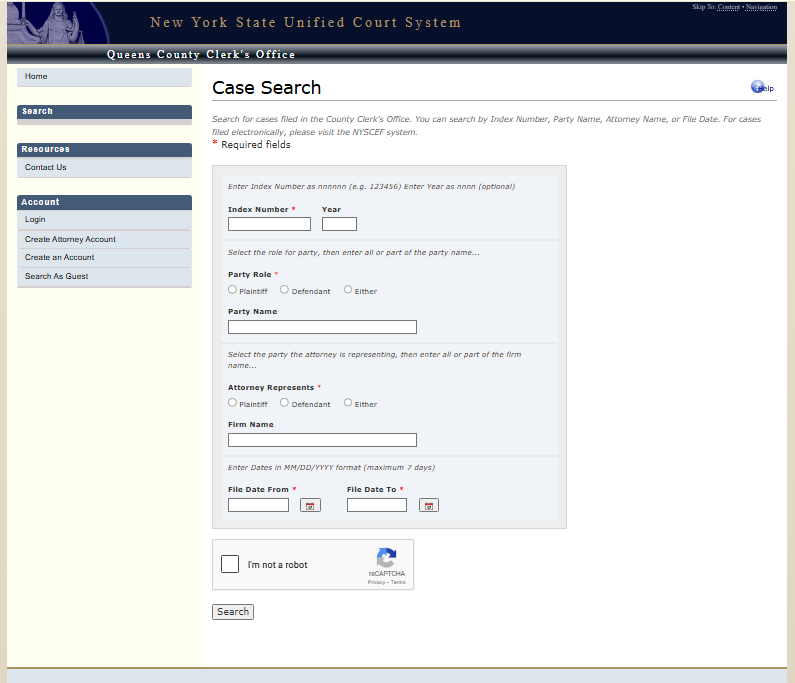
- Enter the Index Number in the required field.
(You may also add the Year to narrow results.) - Select the Party Role (Plaintiff, Defendant, or Either) and enter the Party Name if needed.
- To search by attorney, choose who the attorney represents and enter the Firm Name.
- Use the File Date From and File Date To fields to filter cases by filing date.
- Complete the “I’m not a robot” verification.
- Click Search to view available case details.
eCourts (New York State, if available)
- Open the official civil case search page:
https://iapps.courts.state.ny.us/webcivil/FCASMain
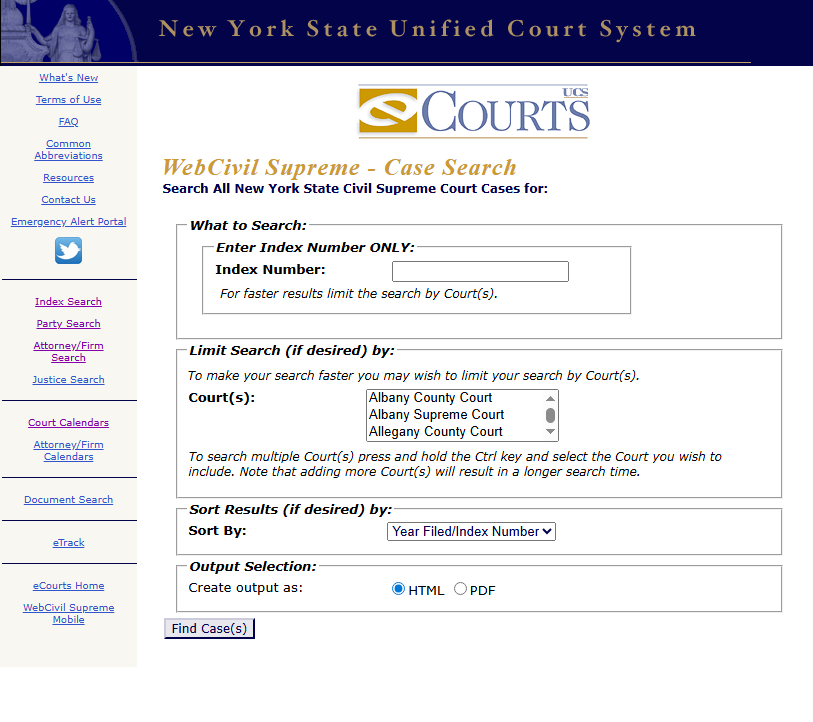
- Choose a search option from the left menu (index number, party name, attorney/firm, justice, or documents).
- Enter the required case details in the search form.
- Use optional filters like court selection or sorting preferences.
- Click Find Case(s) to view matching court records.
Arraignment Process Explained
The arraignment process in Queens County is the first official court appearance for someone charged with a crime. During this hearing, the court informs the defendant of the charges, reviews bail options, and records their plea.
What the Arraignment Process Means in Queens
In Queens County, arraignments are scheduled quickly after an arrest to ensure defendants are formally advised of the charges against them. This step occurs for both individuals arrested and those issued Desk Appearance Tickets (DATs). At arraignment, the court ensures legal rights are protected, including the right to an attorney and the opportunity to request bail. Law firms like Shalley & Murray often note that early legal guidance can impact bail decisions and case strategy.
The process begins with booking, which includes taking fingerprints, photographs, and entering the arrest into the system. Once booked, the defendant is brought before the arraignment court, usually within 24 hours, unless they have received a DAT.
Typical Sequence of Events
The arraignment process in Queens County generally follows a clear sequence:
- Booking: Law enforcement documents the arrest and completes intake procedures.
- Arraignment Hearing: The judge reads the charges and ensures the defendant understands their rights.
- Bail Hearing: The court determines if bail will be granted, and the amount required, factoring in flight risk, criminal history, and community ties.
- Plea Entry: The defendant can plead guilty, not guilty, or no contest. Most often, defendants plead not guilty to allow time for legal review.
Law offices such as Stephen Bilkis & Associates emphasize that attending this hearing with an experienced attorney can influence bail conditions and plea negotiations.
What to Expect in Arraignment Court
Arraignment court is typically brief but structured. Defendants will:
- Stand before a judge who formally reads charges
- Be asked about representation and may request a court-appointed lawyer
- Participate in bail or release discussions
- Enter a plea for the case
Courtrooms are busy, so punctuality is critical. Waiting times can vary, but hearings usually last 15–30 minutes. Defendants should remain calm, address the court respectfully, and listen carefully to instructions.
Criminal Hearings & Case Types
Criminal hearings in Queens County Criminal Court cover several stages, from initial arraignment to final disposition. Misdemeanor cases often move faster, while felony preliminary hearings involve additional procedural steps before trial. Each stage of the process is documented on the Court Docket, which records scheduled hearings, filed motions, judicial decisions, and case status updates. Criminal hearings serve as checkpoints where the court reviews charges, sets timelines, and ensures defendants receive a fair process under the law. Arraignments, preliminary hearings, and trial dates are reflected on the Court Docket, helping defendants, attorneys, and the public track case progress and better understand what typically follows an arrest.
Types of Criminal Hearings
Queens County handles multiple hearing types, each with specific purposes:
Arraignment
- This is the first hearing after the arrest.
- Defendants hear the formal charges and enter a plea (guilty, not guilty, or no contest).
- Bail and conditions of release are often addressed.
Preliminary Hearing
- Required for felony cases to determine if there is enough evidence to proceed to trial.
- The judge reviews prosecution evidence and hears defense arguments.
- Not all cases reach this stage; misdemeanors generally skip preliminary hearings.
Adjournments and Status Hearings
- These hearings check case progress and may reschedule trials or other hearings.
- Requests for additional evidence or time to prepare are handled here.
- The court may also review compliance with pretrial conditions.
Trial
- Both misdemeanor and felony trials take place after all preliminary matters are resolved.
- Evidence is presented, witnesses testify, and a judge or jury determines guilt.
- Trial dates are set during earlier hearings, often months after the arraignment.
Misdemeanor Cases vs Felony Preliminaries
Misdemeanor and felony cases follow different paths:
| Case Type | Typical Process | Timeframe | Court Involvement |
|---|---|---|---|
| Misdemeanor | Arraignment → Adjournments → Trial | Weeks to a few months | Handled directly in criminal court |
| Felony | Arraignment → Preliminary Hearing → Pretrial → Trial | Several months to over a year | May involve multiple judges; preliminary hearing required |
- Misdemeanors include theft under $1,000, simple assault, and minor drug offenses. These cases usually move faster.
- Felonies include serious theft, assault, or violent crimes. The preliminary hearing ensures sufficient evidence before proceeding to trial.
Typical Timeline from Arrest to Disposition
While timelines vary, the typical process in Queens County Criminal Court looks like this:
- Arrest and Initial Appearance: Within 24–48 hours of arrest, defendants appear in court.
- Arraignment: Formal charges read, bail set, plea entered.
- Preliminary Hearing (for Felonies): Usually scheduled within a few weeks of arraignment.
- Adjournments and Pretrial Hearings: The case may be rescheduled multiple times for evidence review or motion filings.
- Trial: Date set months later, depending on court calendar and case complexity.
- Disposition: Verdict or plea agreement finalizes the case. Sentencing follows if convicted.
Court Hours, Contact & Clerk Info
The Queens County Criminal Court operates regular business hours for most administrative and courtroom matters, with separate schedules for arraignments and urgent cases. The court clerk’s office handles filings, summons, and desk appearance tickets, serving as the main point of contact for the public.
Court Hours: Regular vs. Arraignment
Queens Criminal Court maintains distinct hours depending on the type of proceeding:
- Regular Court Hours: Monday to Friday, 9:00 AM – 5:00 PM. These hours cover general court business, including filings, record requests, and routine hearings.
- Arraignment Hours: Arraignments are conducted daily, often starting at 10:00 AM, including weekends for urgent cases. These sessions handle defendants appearing on summonses or arrest warrants.
- Special Sessions: Certain cases, such as desk appearance tickets or summons requiring immediate review, may be scheduled outside regular hours.
Courthouses in Queens follow these schedules closely, but times can vary for holidays or emergency sessions. Checking the official New York Courts website or calling ahead is recommended to confirm exact timings.
Contact Numbers & Offices
The Queens Criminal Court has multiple contact points to assist the public efficiently. Key numbers include:
| Department | Phone Number | Purpose |
|---|---|---|
| Clerk’s Office | (718) 286-6000 | Filings, records, general inquiries |
| Arraignment Desk | (718) 286-6200 | Daily arraignment information |
| Summons Desk | (718) 286-6300 | Desk appearance ticket scheduling |
These numbers connect directly with court personnel who can answer questions about case status, forms, or court procedures. Using the correct line ensures faster service.
Queens Criminal Court Clerk: Role and Responsibilities
The Queens criminal court clerk oversees all administrative and procedural aspects of the court. Key duties include:
- Managing court records and filings
- Processing summonses and desk appearance tickets
- Scheduling hearings and arraignments
- Assisting attorneys and the public with documentation
- Collecting fees and fines for certain cases
The clerk’s office acts as the primary administrative hub, supporting judges, court staff, and the community. The office ensures that cases progress smoothly from arraignment through disposition.
(FAQs) – About the Criminal Court
Finding answers about court dates, case documents, or legal procedures can be confusing. This section addresses the most common questions people have about Queens County Criminal Court.
How do I find my court date?
Court dates in Queens County Criminal Court are assigned when a case is filed, and it is important to know when to appear. Individuals can find their court date by checking the official court website, reviewing any summons or notice received by mail, or calling the court clerk’s office directly. Using the online case search or court calendar tools can provide the exact date, time, and courtroom location. Regularly confirming the court date is essential, as missing a scheduled appearance can lead to fines, warrants, or other legal consequences.
What happens if I miss a court date?
Missing a court date can lead to serious consequences, including the issuance of a bench warrant or the revocation of bail conditions. The court may reschedule the hearing, but penalties or additional fees could apply. If an emergency prevents attendance, contacting the court clerk immediately can sometimes allow for rescheduling. Communicating promptly and clearly with the court helps reduce negative outcomes, but appearing on the scheduled date is always the safest approach.
Can I get case documents online?
Some case documents are available online, while others must be requested directly from the clerk’s office. Criminal case filings and basic docket information can usually be accessed through the Queens County Criminal Court website, often at no cost. Certain documents, including certified copies or sensitive materials, require a formal request at the clerk’s office and may involve a small fee. Restrictions may apply for privacy or legal reasons, so checking with the court before attempting to download or print documents is recommended.
Do I need a lawyer?
While hiring a lawyer is not legally required, having legal representation is highly recommended. Attorneys can guide defendants through court procedures, file motions, and present evidence effectively. Individuals who cannot afford a private lawyer may qualify for a public defender who can handle their case. Self-representation is possible, but navigating legal rules and court procedures without professional guidance can be risky and may affect the outcome of the case.
What is the difference between a dismissal and an adjournment?
A dismissal ends a case, meaning that charges are dropped and no further court action is required, often due to lack of evidence or procedural issues. An adjournment, on the other hand, delays a hearing or trial to a later date and may occur because of scheduling conflicts, unavailable witnesses, or ongoing investigations. Understanding this difference helps defendants know whether their case is concluded or simply postponed, which is crucial for planning appearances and complying with court requirements.